Fighting light pollution with Astronomik CLS and CLS-CCD filters
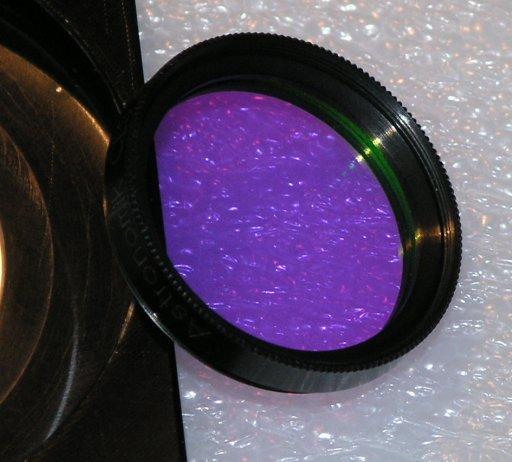
Astronomik CLS and CLS-CCD are quite bright filters that are designed to cut light pollution and sky glow. Both filters are available in different sized including Canon Clip filter that mounts inside the DSLR body. They are bit brighter than Baader UHC-S and similar UHC filters. They pass [O III], H-beta, H-alpha, [S II] bands in which emission nebulas glow. They don't pass bands in which street lights glow. CLS-CCD has an IR cut just after [S II], while CLS just keeps the transmission further in the IR. Those filters can be used visually, but they will give most of themselves in DS imaging.
Android update for CSS media queries
If you are using CSS media queries to use custom CSS for mobile devices then you might want to know that newer Android versions (starting from 2.3 or 2.2) won't use max-device-width. Instead they use -webkit-device-pixel-ratio, like so:
<link rel="stylesheet" media="screen and (-webkit-device-pixel-ratio:0.75)" href="style_mobile.css" />
Improving select fields in Django with django-ajax-selects
django-ajax-selects is a handy Django application that allows substituting select fields with ajax autocompleate fields. That can be done for example for Django admin panel and ForeignKey, ManyToMany fields. It solves the problems with select fields containing a lot of values.
IronPython introduction for Python developers
IronPython (IPY) is an implementation of the Python programming language targeting the .NET Framework and Mono. We get the same syntax and even standard library like in normal Python (CPython), but the code is executed on the .NET or Mono platform. At the moment current IronPython releases is tagged at 2.7 and is compatible in general with Python 2.7.
IronPython isn't limited to MS Windows only. It works under Mono too (Linux and other systems)...
Choosing Edmund Optics filters for helium, oxygen and argon narrowband imaging
Doing narrowband images in helium, neutral oxygen or even argon bands requires some narrowband filters that aren't (yet?) made by astro-filters makers. The problem may be solved by machine vision / scientific lab filters. More narrower and better they get the more they will cost - even more than astronomical filters. Semi-narrow filters may be found cheaply (Omega Optical on Ebay for He-I and He-II). 10 nm narrow filters are also available through Edmund Optics - and I've chosen 4 EO filters for experimental narrowband imaging...
Cooling cams with USB powered Peltier devices
When modding uncooled guiders, DSI cameras or long-exposure webcams there is sometimes the need to cool the sensor to limit amp glow or the amount of hot pixels. This requires using a Peltier module. You can buy modules in some electronic shops, but you will also need power supply, radiator and a fan. Instead of doing everything from scratch you can re-use existing cooling units. One source of them are camp fridges, the second one - USB powered drink coolers.

Quick test of a Optec NextGen 0.5 SCT reducer
Optec NextGen is a series of focal reducers / correctors for SCT telescopes. They come in three versions: 0.7, 0.5 and 0.33 reduction factor. I've got the 0.5x version supporting sensors up to 17,5 mm diagonal.
Optec states that it corrects for field curvature and spherical chromatism. There is no info if it corrects for coma (like in Starizona unit description)... however many correctors/reducers for SCTs doesn't describe what they actually do and correct. The NextGen looks like so...
Cooling solutions for QHY5
All of the QHY5 camera types are well known as an affordable guide cameras. For a low price we get guiders with ST-4 support and quite big for a guider sensors up to 1/2". Those cameras can also be used for Solar System imaging. QE is around 50% for mono and 30-40% for color Micron sensors. The only problem they could have is the noise and fixed pattern noise typical to Micron CMOS sensors. For most of the guiding cases it won't be a problem, but when you will need max gain and longer exposure to find faint stars in an OAG - it may be a problem. Also for DS/Solar System imaging with such cameras that noise isn't welcomed. Dark, bias and flat frames won't solve that completely. The basic thing we can do is to use passive or active cooling.
Astrophotography acquisition and processing in Nebulosity
Nebulosity is an application for astrophotography - image acquisition and processing. It's not free, but it's very easy to use, and supports various cameras (Atik, QHY, SBIG, SX, FLI, QSI, Meade, Moravian... DSLR). For processing it offers at least full set of "basic" features (stacking with optional rotation or scaling, darks/flats/bias support, hot pixel maps, curves, levels, colour balance etc.). For acquisition it offers very handy and clean user interface.
How to guide a mount with PHD?
PHD is a free and popular application for mount guiding. Applications checks position of a star on an image from a guide camera, and if it detects any shift in the position of the star - it sends corrections to the mount. This allows taking very long exposures of deep space objects. PHD is easy to use and can be used with variety of mounts and guide cameras.


