Imaging challenge - Uranus rings
Last year Uranus rings were photographed using a 800 mm telescope and quite "normal" imaging setup consisting of Brightstar Lyuba camera and a methane band filter. What about imaging Uranus rings this year from smaller scopes?

Uranus rings are very faint and the planet just out-shine them. To make them visible a methane band filter is used (like the Baader methane filter). In this narrow band Uranus absorbs nearly all the light, while rings do not - and became visible.
Aside of the filter you would need a DS imaging setup with a big scope capable of doing few minute exposures on high resolution - so a cooled mono primary camera and good guiding (AO units could be handy too).
Focus the setup for methane band filter on a bright star, switch to a clear filter, center Uranus in the camera field of view and go back to the methane band filter (you won't see anything on the preview now) - and start imaging (few minute exposures required).
Testing Django applications with Selenium
Selenium is a popular tool for browser automation. Main usage for Selenium are browser based tests of web applications. With a real browser and handy API you can test frontend behavior of an application (like JavaScript code).
In Django 1.4 we got LiveServerTestCase - a TestCase that spawns a test server. This allowed much easier Selenium integration in Django tests. You can change a presentation on benlopatin.com. If you will find something different - check the date as it may describe older solutions for older Django versions.
In this article I'll show some basic Selenium usage cases in tests - showcasing the api.
Cheap sCMOS camera from Tucsen
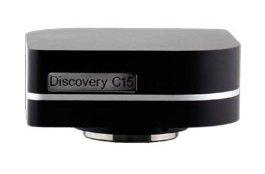
Today I've noticed that Tucsen - Chinese camera maker is offering a sCMOS camera Discovery C15. It's a 1270 x 1030 (color and mono available) sensor with 3.63μm x 3.63μm pixels. It offers 15fps at max resolution and low read noise - 3e r.m.s. The key feature of a sCMOS (scientific CMOS) sensor is low read noise. Not as low as in EMCCD, but still lower than in CCDs and plain CMOS sensors. Update: The color camera is named as C15 and the mono is M15.
sCMOS technology leaders (like Andor) offer sCMOS sensors with around 1.5e read noise - but at a much higher price. I found the Discovery C15 priced at $405 on alliedscientificpro.com.
sCMOS at low price could be a good planetary camera. Low read noise would give much less grainy noise - better signal to noise ratio. Mono sCMOS would be even better as it would be very handy for methane band imaging and similar cases where the planet is very dim.

On the other hand there is e2v CMOS sensor - EV76C660 that should hit the camera market later this year. The sheets state 3e read noise for it (but it's unclear if a camera would have 3e read noise in total or more). It comes in mono and color variants, and the mono has around 80% QE which is a stunning result. Solar system imaging is getting higher and higher nearly every month :)
Shops near you – geographic features of GeoDjango
Boom on mobile devices and widespread Internet access created a demand for applications aware of user geographic location. Nowadays using modern web frameworks with magical powers you can make such geo-enabled web applications easily. Django offers a special sub-framework called geodjango. There you will find an enormous amount of features of "geographic" nature.
In this article I'll present a simple application that will use a part of GeoDjango to search and display shops closest to given address.
Address geocoding with geopy
geopy is handy module for address geocoding - turning a location address into geographic coordinates (useful for maps). It supports various geocoding engines like Google Maps, Yahoo!, Windows Local Live and others. This module can be used to aid your GeoDjango code.
e2v Ruby sensor in first planetary tests
Some time ago I wrote about e2v ruby line of CMOS sensors that were supposed to hit the market this year. First test cameras with one of those ruby sensors have already reached Solar System photographers. Cameras are tested by Airylab and Torsten - FireCapture creator (the app now supports also IDS cameras).
Those cameras use EV76C661 sensors - one of two ruby sensors announced. This one offers global and rolling shutter (global is safer for imaging unsteady objects, but has higher read noise) as well excellent sensitivity - higher than nearly all sensors used since today.
Second sensor EV76C660 didn't entered camera tests yet. It will offer only rolling shutter but also even higher QE (around +10% more) and even lower read noise. Time will tell how it will perform in cameras but it may be next break point for Solar System imaging. Enormous jump in infrared sensitivity will allow much easier methane band or Venus night side imaging as well it may allow many new infrared imaging - like lunar petrographic imaging or Uranus rings imaging in methane band - at 889 nm.
Prices for the currently tested cameras aren't yet known. Cheapest will be the USB2 version. There are also faster USB3 and GigE versions planned.
Continuous integration of Django projects with Jenkins
Jenkins is a tool for watching or managing jobs. Either external like cronjobs or executing "build and test" jobs of your Django projects. There is even more, but in this article I'll focus on a basic Jenkins setup - building and testing a Django project. For Django there is django-jenkins that allows an easy integration with Jenkins tools like nice visualization of code coverage, pep8/pylint/pyflakes code violations.
In this article I'll setup a local Jenkins configuration that will look on a folder with the code. In real world Jenkins would watch a repository and execute a job when a new changeset shows up.
Temporary files in Django for tests and on the fly file manipulation
Sometimes you need to do some operations on files on the fly in the code and place the result for form validation or save it with a model instance. When you want to write forms tests files may also be needed. To avoid using extra static files for tests you can use some temporary files. All those (and more) can be done with in-memory / temporary file-like objects. On the web there are StringIO or ContentFile usage examples but they wont work always - or as good as Django InMemoryUploadedFile object would. Here is an example of InMemoryUploadedFile usage for tests and other similar cases.
Genika adds support for Point Grey cameras
Creators of genika astroimaging application are working on supporting mono Point Grey cameras (USB2, USB3, GigE, Firewire 800). Currently the application is in non-public beta status. If you are interested contact genika team for more info.
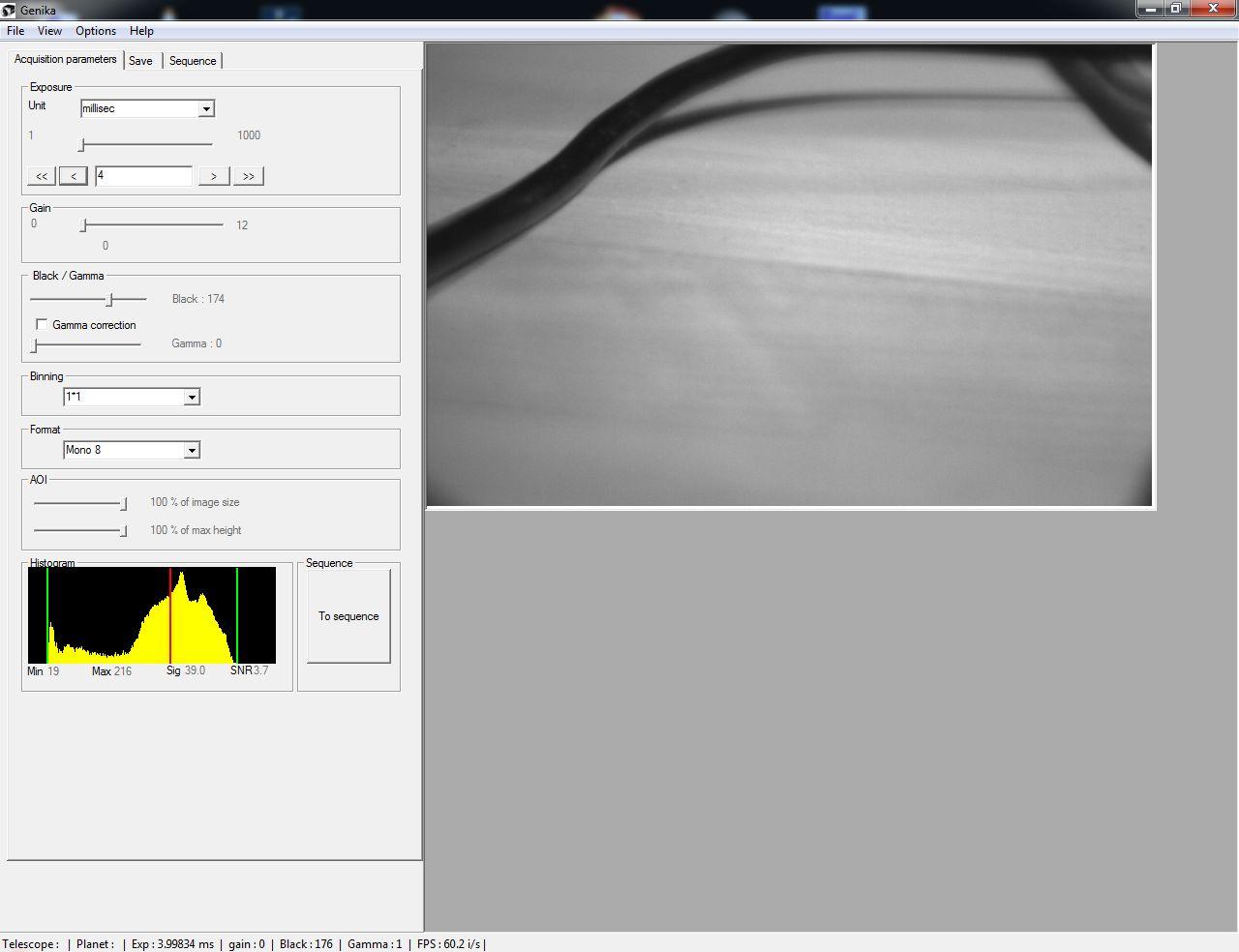
Right now PGR cameras are supported by FireCapture. Genika specializes in efficient disk write process which is very handy when you use a fast camera with a big sensor.
Very cheap Point Grey Firefly 0.3 cameras on ebay
On ebay a batch of very cheap Point Grey Firefly 0.3 mpix mono cameras showed up. Only $25 + shipping for a camera.
Sold model has a lens that would have to be removed. Update: you can remove the lens only and use SPC/TouCam webcam nosepiece adapter that will screw into the thread you get after unscrewing the lens. Aside of that it should be like any other Firefly 0.3 variant.
I've tested Firefly 0.3 in Solar System imaging. It does work, but it has one issue - low gain values. Due to low gain its very hard to take pictures of dim objects like Saturn. For Moon or Sun it's not a problem, but Saturn required maximal exposure time in FireCapture (~60 ms) and bright orange visual filter to get a good f/20 image.
At $25 it's very tempting "first-mono" real dedicated planetary camera. You can start with shooting mono luminance shots of planets with orange or red visual filters. There is no compression like in webcams so you can freely shoot even at max 60 FPS speed.


